Skip to Content

Uganda Coffee: An Origin Guide for Roasters

Uganda produces both Robusta and Arabica of real commercial and specialty interest. This guide covers the regions, harvests, processing and grades  plus everything about our Uganda Arabica and Uganda Robusta green coffee.

Explore current Uganda coffees

Uganda Coffee at a Glance

Known as the Pearl of Africa, Uganda sits directly on the equator, with coffee grown from the Lake Victoria basin up to mountain elevations reaching 2,300 metres. Rich volcanic soils and two rainy seasons create strong conditions for both species providing year-round supply. Uganda is widely regarded as the birthplace of Robusta, which still grows wild in its forests.

7.43M
60 kg bags exported

67%
Of exports go to Europe

2,300m
Peak growing elevations

Source: Uganda Ministry of Agriculture reporting, USD 2.09 billion in export value over the twelve months from June 2024 to May 2025. Figures last reviewed 16 July 2026 and should be refreshed as new crop-year data is released.

Major Growing Regions

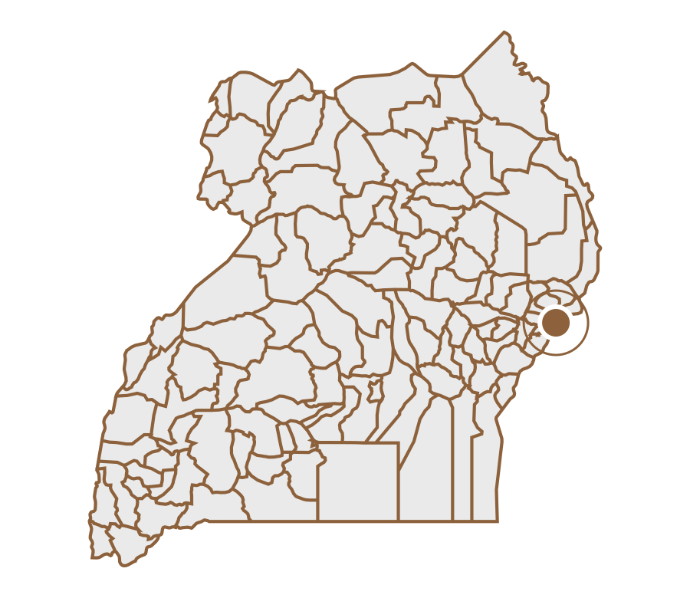
Location pin of Mount Elgon on a custom map

Mount Elgon (east)

Home of Bugisu Arabica, grown on volcanic slopes along the Kenyan border at some of Uganda's highest elevations.

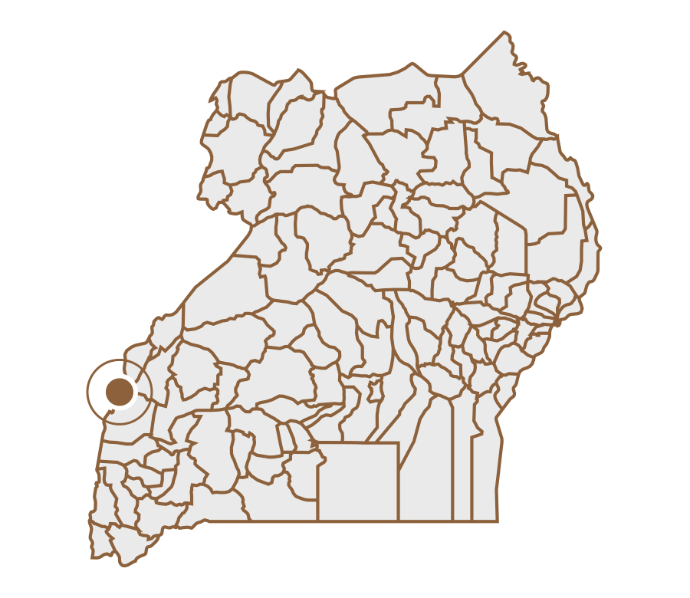
Location pin of Rwenzori Mountains on a custom map

Rwenzori Mountains (west)

A growing source of Arabica, including many naturally processed lots, from smallholder farms in the foothills of the "Mountains of the Moon".

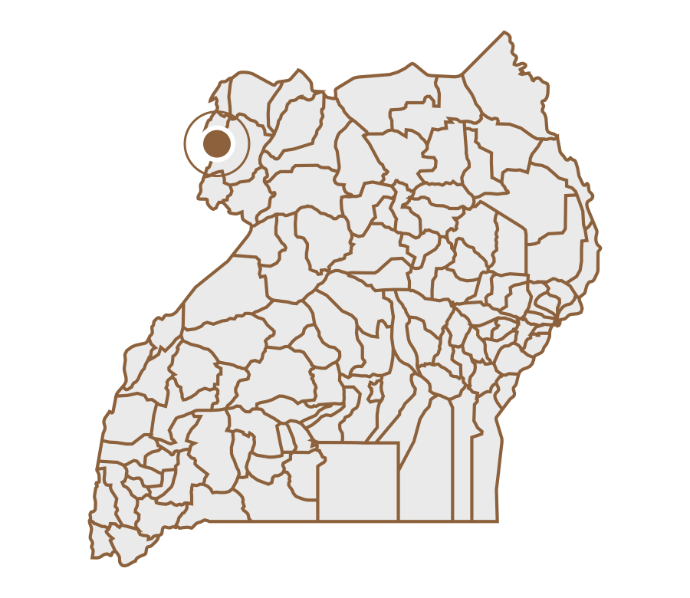
Location pin of West Nile on a custom map

West Nile (north-west)

A smaller Arabica area around Okoro known for distinctive cup character.

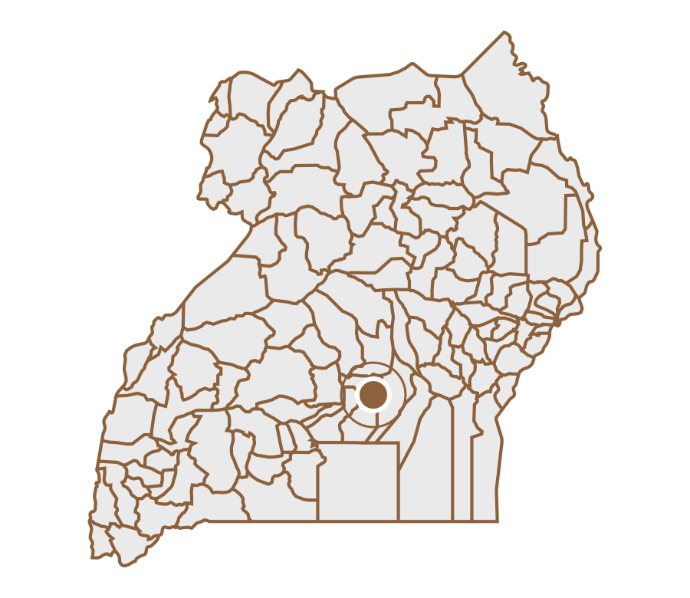
Location pin of Central and Lake Victoria basin on a custom map

Central and Lake Victoria basin

The heartland of Ugandan Robusta production, from smallholder plots and co-operatives across the low plateau.

Harvest and Shipment Timing

Harvest windows vary by region, altitude and rainfall, so treat the ranges below as a planning guide rather than fixed dates.

Region / typeTypical main harvestNotes
Mount Elgon ArabicaRoughly October to FebruaryHigher altitudes pick later.
Rwenzori ArabicaTwo seasons in many areasTiming varies with rains on each side of the range.
Central / basin RobustaMain and fly crops across the yearRegional rains create two overlapping cycles.

Milling and export preparation come between harvest and shipment from Mombasa. Your contract states the shipment period for each container.

Uganda Robusta Green Coffee

Robusta grows wild in Uganda's forests and accounts for approximately 80% of the country's production, making Uganda one of the world's most important Robusta origins. For roasters, that heritage means depth of supply and generations of Robusta know-how rather than an afterthought crop.

Grades and screen sizes

Ugandan Robusta is traded primarily by screen size, this is the physical size of the bean. Screen 18 denotes the larger preparation, with Screen 15 a common smaller grade. Larger screens are typically associated with more even roasting.

Cup character and applications

Well-prepared Ugandan natural Robusta typically shows low acidity, heavy body and dark-chocolate, nutty character which widely used to add crema, body and strength to espresso blends, and suited to applications where resilience and caffeine content matter.

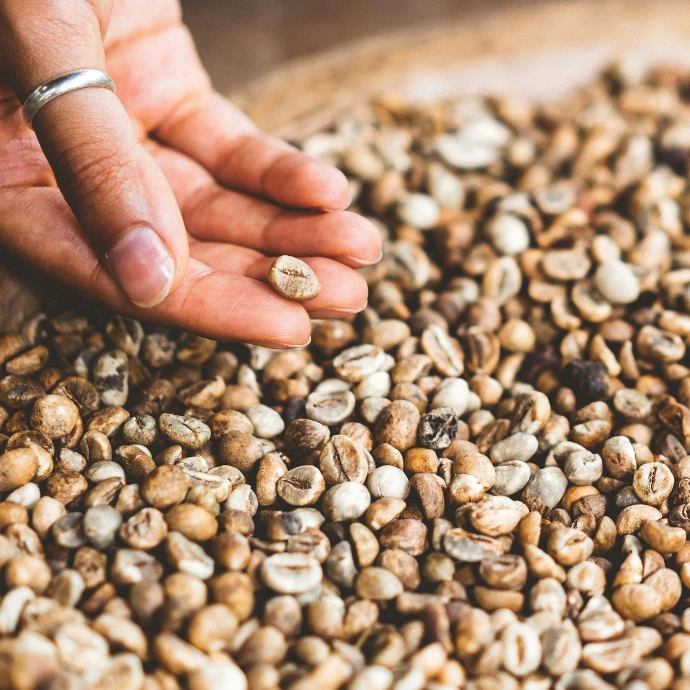
Hand picking up a sing bean of robusta from a basket of raw robusta beans
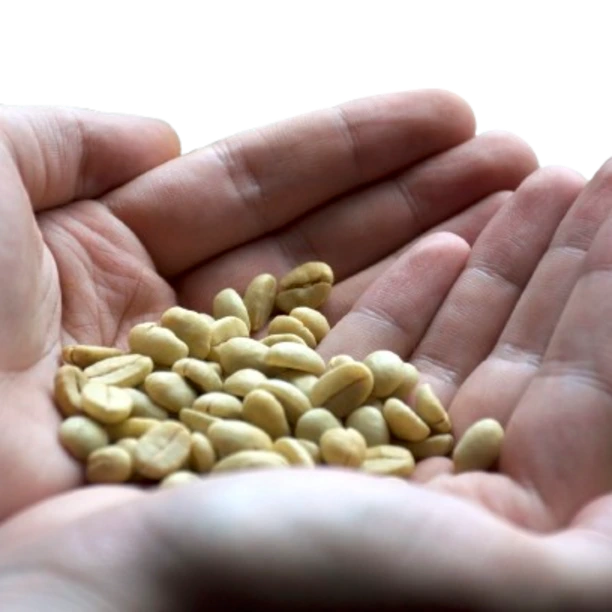
Hands in a cupping position holding some parchment Arabica coffee beans

Uganda Arabica Green Coffee

Arabica makes up roughly 20% of Uganda's production and grows at altitude on rich volcanic soils mostly on Mount Elgon (the home of Bugisu coffee), in the Rwenzori Mountains and around Okoro in West Nile. Equatorial conditions with elevations reaching 2,300 metres give slow cherry maturation, which gives it the density and cup complexity.

Processing: DRUGAR and WUGAR

Ugandan Arabica is traded in two broad preparations: WUGAR (washed Uganda Arabica) and DRUGAR (dry Uganda Arabica which is naturally processed, sun-dried in cherry). Naturals typically bring heavier body and fruit-forward sweetness while washed lots cup cleaner and brighter. As a guide, natural Ugandan Arabica suits fruit-forward filter roasts, single-origin espresso and adding sweetness to blends. 

Sourcing: our team in Uganda works with more than 50 partner farms and co-operatives. See traceability and responsible sourcing.

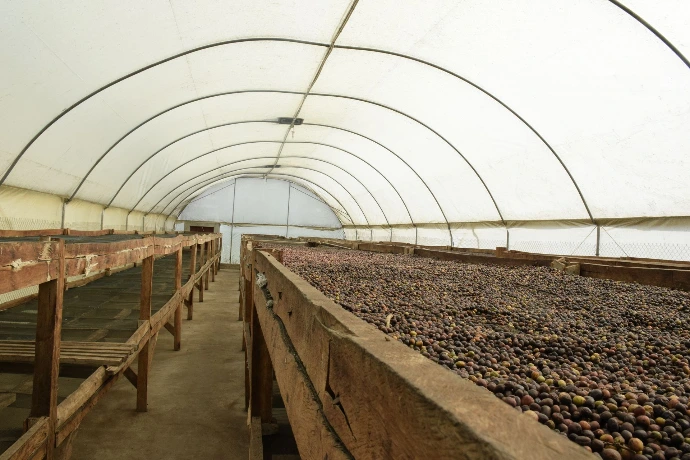
Inside view of solar drying station with racks of coffee drying

Processing Methods

Ugandan coffee is produced as both washed and natural (dry-processed) coffee. The current Zambrew lots are naturally processed: sun-dried whole cherry before hulling, which typically contributes body and sweetness to the cup.

Flavour Profiles

There is no single "Uganda taste". Cup character depends on species, region, altitude and importantly, process. Judge each lot on its own cupping evidence. Every Zambrew lot page states what has and has not been assessed. How we verify specifications is explained on our quality and specifications page.

Uganda Coffee FAQs

Yes. Uganda is one of Africa's largest coffee exporters and the birthplace of Robusta, exporting 7.43 million 60 kg bags in the year to May 2025 according to Ugandan government reporting.

Both. Production is approximately 80% Robusta and 20% Arabica, with Arabica grown at altitude on Mount Elgon, in the Rwenzoris and in West Nile.

It varies by species, region and process. From bright, fruity high-grown Arabica to full-bodied, low-acidity natural Robusta. Request a free sample to cup a specific lot rather than relying on generalisations.

It depends on region: Elgon Arabica is picked roughly October to February, while Robusta areas have main and fly crops across the year, allowing for year-round supply.

Yes. Natural Robusta and Robusta-Arabica blends are widely used in espresso for body and crema. Ugandan Arabica works well in filter and single-origin espresso depending on the lot.

DRUGAR stands for dry Uganda Arabica which is Arabica that is naturally processed (dried in the whole cherry) rather than washed.

It is a bean-size grade: beans retained by an 18/64-inch screen, the larger standard preparation for Ugandan Robusta. Important to note that coffee that is labelled as screen size 18 typically contains some 17 or even 19.

Yes. Robusta typically contains roughly twice the caffeine of Arabica, one reason it adds perceived strength to blends. Harsh bitterness is not inevitable: clean, well-prepared naturals cup with sweetness, body and chocolate character.

Interested in Learning More?

Explore a curated list of online resources that cover niche varieties of coffee and offer more in-depth insight into the profiles, economics, and agricultural side of Ugandan coffee.

Uganda Coffee Federation


An insider's view of the industry from Uganda's own coffee trade body. It covers how smallholders intercrop coffee with food crops under banana shade, the native Robusta types 'Nganda' and 'Erecta', and Arabica marketed as 'Wugar' and 'Drugar' grown along the western border, plus the prized Bugisu coffee from Mount Elgon.

Click here to visit website 

Coffee Quality Institute


Great for understanding Uganda's specialty Robusta story. It explains how the UCDA and CQI published the industry's first comprehensive Fine Robusta standards in 2014, and how Uganda now has the largest pool of Fine Robusta cuppers of any producing nation.

Click here to visit website 

World Coffee Research


Best for the research and breeding side. It describes how WCR has partnered with Uganda's National Agricultural Research Organisation since 2017 on coffee R&D roadmaps, modernized breeding, and genetic fingerprinting tools for variety traceability.

Click here to visit website 

Uganda Coffee Development Authority


A more statical resource made by the Ministry of Agriculture Animal Industry and Fisheries of Uganda. This website covers annual reports and publications of the stats around Ugandan Coffee. 

Click here to visit website 

Taste Uganda for Yourself

Free samples of every current lot. Cup them on your own bench before you book a container.